Campus for Central Saint Martins
; B1 X [: h' k2 }' B5 y Oby Stanton Williams" |; s5 ]2 P5 `- t
, c9 s+ U# i3 V1 g/ e
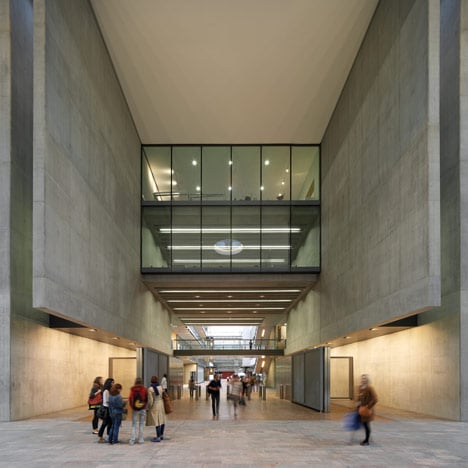
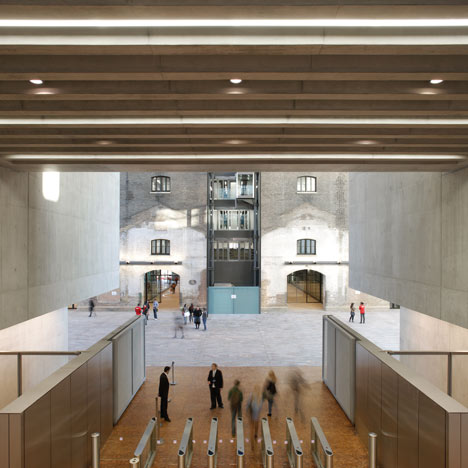
, C1 w4 w( o9 f: ]4 o; d5 oArchitects Stanton Williams have completed a new campus for art and design college Central Saint Martins in and around a Victorian granary and two former transit sheds in London.9 G3 a, d3 C& [& |6 Y- Y, X
9 X4 ~$ u# Z( M5 b
[/url]$ d9 }* n* `1 J* I( b
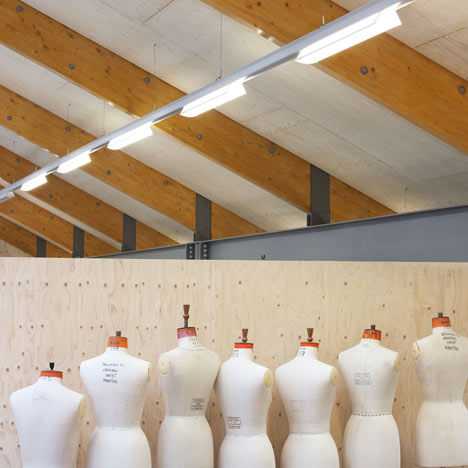
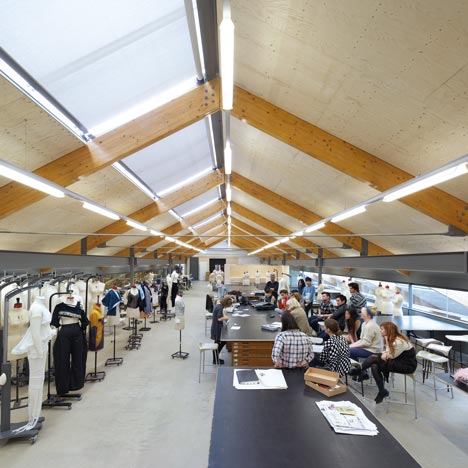
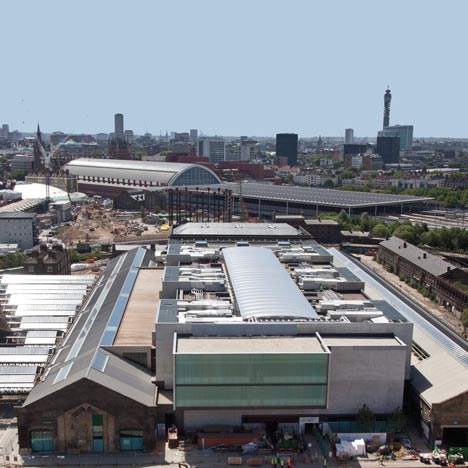
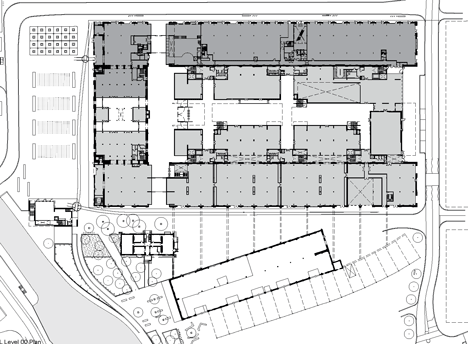
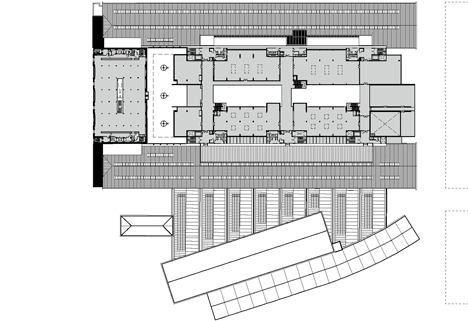
Two new four-storey buildings provide studio blocks between the two 180 metre-long sheds, one of which now houses workshops./ f- G$ M2 } ^ z) x$ m
 ; s; n8 K8 c9 D ; s; n8 K8 c9 D
Cycle stores are located in historic horse stables below this eastern shed, while shops and bars now occupy the ground floor of the western shed.
9 A. z) ]# W/ Q1 O3 M4 a) M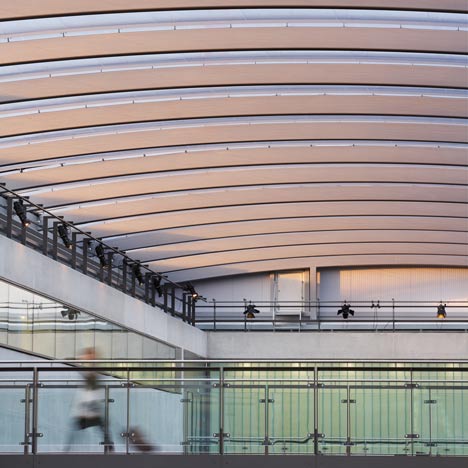
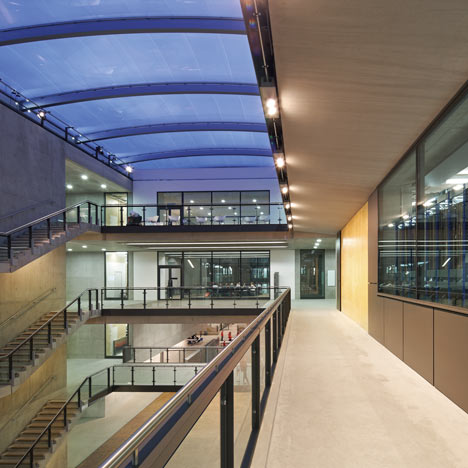
9 t- _, Y7 q- B ]( _$ n* j- F$ K. oFour-storey-high concrete walls frame the main entrance to the college, which leads into an internal street with overhead bridges and an arched, clear plastic roof.
3 }) o7 ~2 n' G f- s8 u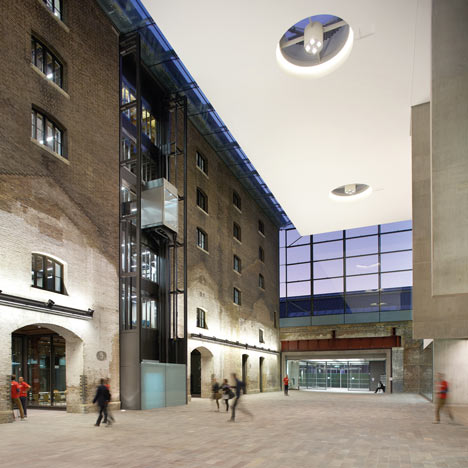
B6 s P( _7 U$ R8 SA performing arts centre located at the end of this street contains a 350-seat theatre for student performances.+ _, L# N; v1 Z
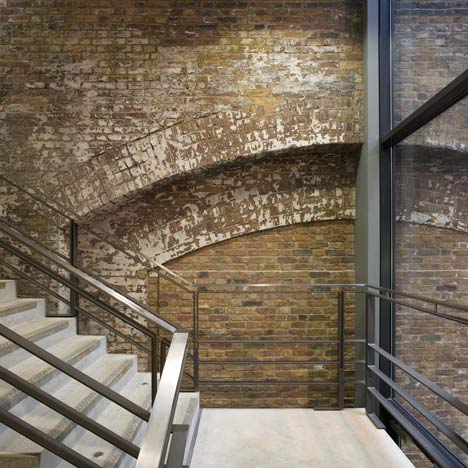
% k; L @2 z$ n. n" l' I7 NThe refurbished former granary now houses a library and faces a public square currently under construction.
+ O. @: e1 e$ q _& L. s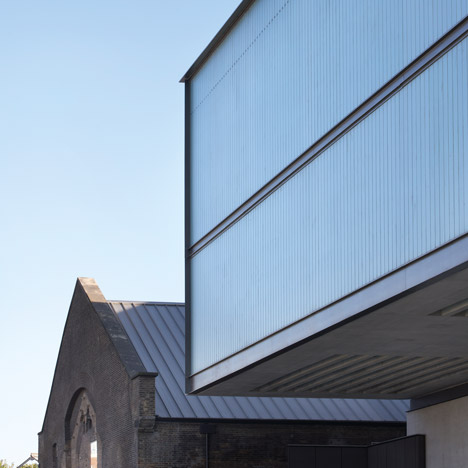 0 E9 C0 x5 S0 X/ ?( q 0 E9 C0 x5 S0 X/ ?( q
Past projects by students at the University of the Arts college include [url=http://www.dezeen.com/2009/03/27/close-encounter-by-oscar-lhermitte/]functionless objects for unpredicted needs and rockers made from found chairs - see all our stories about Central Saint Martins here.
' e) i1 Y$ b. V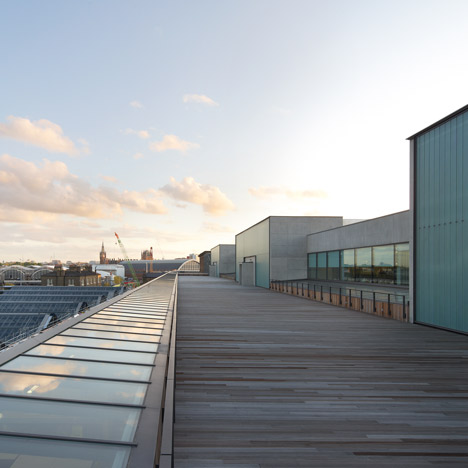
) Q2 E7 u: G* H4 N% F2 y: \) sStanton Williams also recently completed another UK university building - see our earlier story here about a research laboratory at Cambridge.
( ]% y# q4 T0 Q* V u* h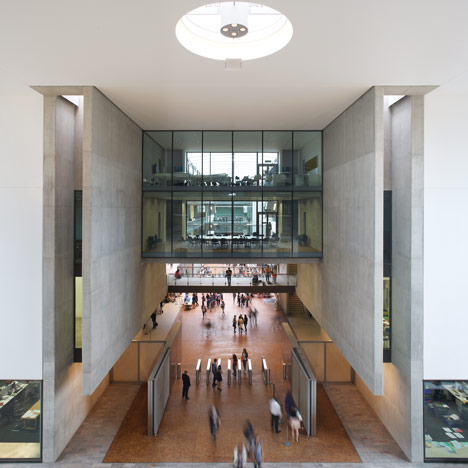 / |6 D* C3 x; ?$ j / |6 D* C3 x; ?$ j
Photography is by Hufton + Crow, apart from where otherwise stated.9 ^1 l' A. ?* [- r3 n& R. q
$ e# _$ ~- C+ x3 H% b5 s8 m$ MHere’s a more detailed description from Stanton Williams:0 S7 ?9 D& s/ D
New University of the Arts London Campus Central Saint Martins at King’s Cross' I4 g$ f1 J2 k
To the north of King’s Cross and St Pancras International railway stations, 67-acres of derelict land are being transformed in what is one of Europe’s largest urban regeneration projects.
2 H% i! e$ u. N' n T) _9 T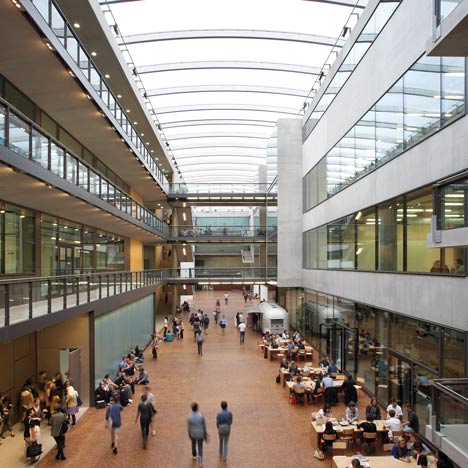 ( Z3 i' h9 B [. e ( Z3 i' h9 B [. e
The result will be a vibrant mixed-use quarter, at the physical and creative heart of which will be the new University of the Arts London campus, home of Central Saint Martins College of Arts and Design.
. H( Z5 ~+ p% D9 N9 q8 j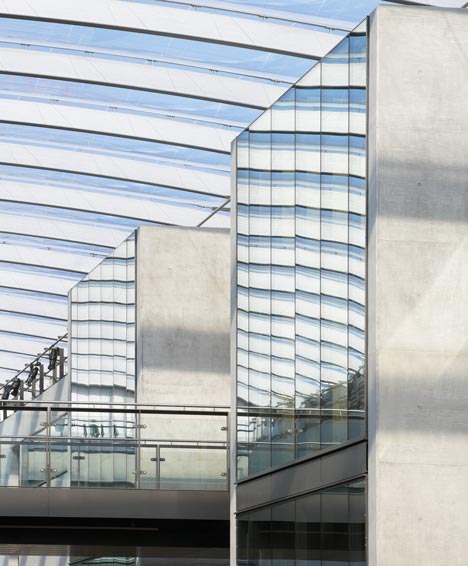
& P3 a3 m3 Z1 [ k3 o! s8 zStanton Williams’ design for the £200m new campus unites the college’s activities under one roof for the first time. It provides Central Saint Martins with a substantial new building, connected at its southern end to the Granary Building, a rugged survivor of the area’s industrial past. v# v! Z# @) D' w& M5 N: ~% N7 e8 u
 - Y% D" V, e' W: g* m5 Q( [ - Y% D" V, e' W: g* m5 Q( [
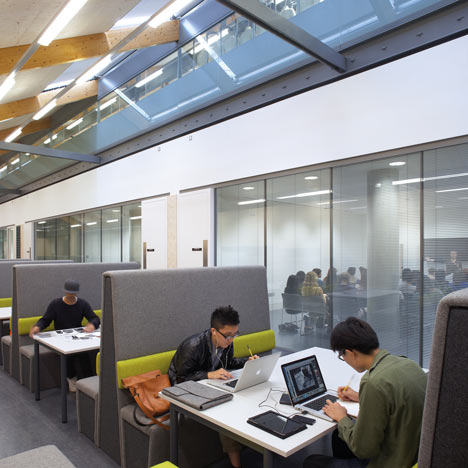
The result is a state-of-the-art facility that not only functions as a practical solution to the college’s needs but also aims to stimulate creativity, dialogue and student collaboration.
- ^- h, \- X/ Q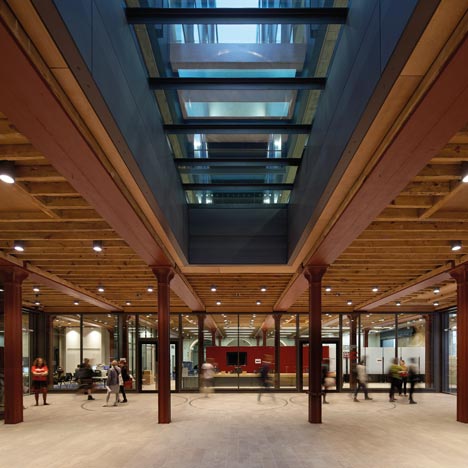
5 d! G% @+ g! X% w4 `A stage for transformation, a framework of flexible spaces that can be orchestrated and transformed over time by staff and students where new interactions and interventions, chance and experimentation can create that slip-steam between disciplines, enhancing the student experience. The coming together of all the schools of Central Saint Martins will open up that potential.
& D" }* R E. Q6 ?' L& K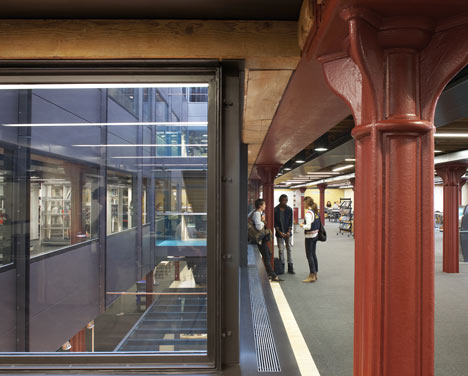 4 Z: v/ M7 S3 l6 f2 i, v 4 Z: v/ M7 S3 l6 f2 i, v
The design aims to maximise the connections between departments within the building, with student and material movement being considered 3-dimensionally, as a flow diagram North to South, East to West, and up and down – similar in many ways to how the grain was distributed around the site using wagons and turntables.
, i, Q( u# ]4 c$ R# m& k, z- y- r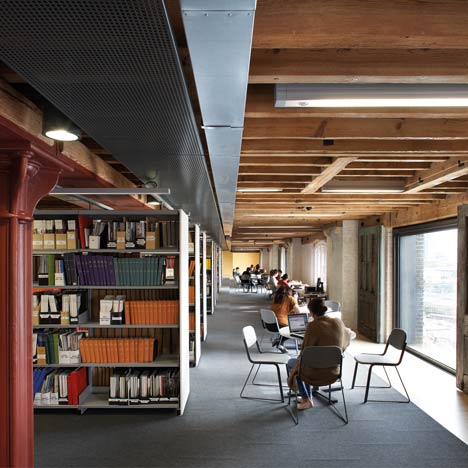
& ^( I2 u. V$ L' ^1 NKing’s Cross offered a unique opportunity: a large site within what promises to be a creative and cultural hub, connected (via King’s Cross Station and the restored St Pancras International) not only to the rest of Britain but also to mainland Europe, plus the chance to develop a robust contemporary architectural response to the boldness of the existing buildings on the site.
. l' o- N% C! s. e5 a) O* V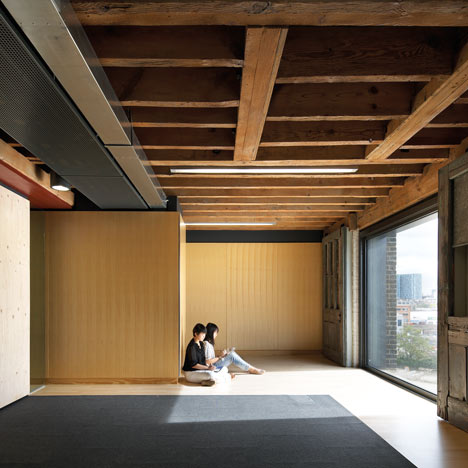
- U6 r. u. ~' T& M7 S1 rThe Granary Building itself has been restored as the main ‘front’ of the college, facing a new public square that steps down to the Regent’s Canal. The building was designed in 1851 to receive grain from the wheat fields of Lincolnshire, unloaded here from railway wagons onto canal boats for onward transport to the capital’s bakeries.
/ q( l! k' x0 R z$ p, g: u2 M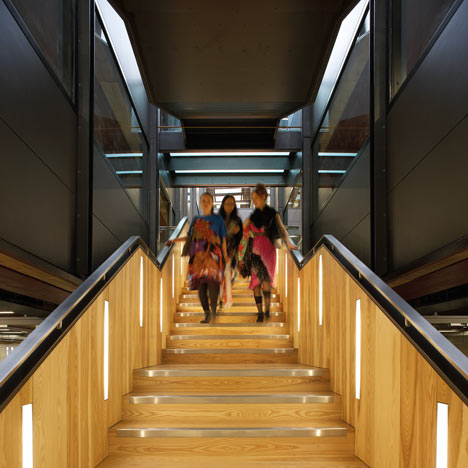 " z4 D$ V4 H6 c' ^. R " z4 D$ V4 H6 c' ^. R
It comprises a solid, six-storey cubic mass, with an unadorned, 50-metre wide brick elevation, extended to 100-metres by office additions flanking the building. To the north, located one to each side of the Granary Building, are two parallel 180 metres long Transit Sheds.5 P5 e* n* _/ B. E2 u1 K7 ]
 7 A7 e5 y' X4 A7 |' s' t 7 A7 e5 y' X4 A7 |' s' t
The design strategy retains the Granary Building, adapted to include functions such as the college’s library, while the Eastern Transit Shed behind is converted to create spectacular workshops for the college. Within the street-level openings of the Western Transit Shed, new shops and bars will add further life to the area. The historic horse stables below the Eastern Transit Sheds have been transformed to new cycle stores for students and staff.
& j6 h( P9 z) v! p3 r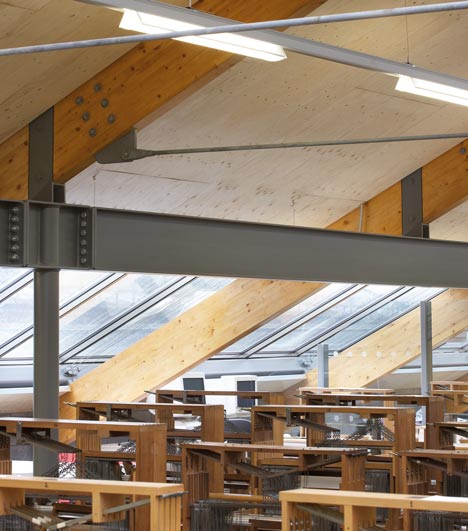
) ]& d. Z$ U d. c$ H3 r2 PThe bulk of the college’s accommodation, however, is located in a major addition to the site, two substantial new studio buildings that occupy the space between the two transit sheds and which, at the North end of the site present a contemporary elevation to the surrounding area. The scale of the new addition responds closely to that of the Granary Building, essentially continuing its massing along the length of the site. It rises above the level of the transit sheds, using contemporary materials so that it will stand, beacon-like, as a symbol of the college’s presence within this rapidly-evolving part of London.6 D/ c( w4 Z& {' S+ x( x
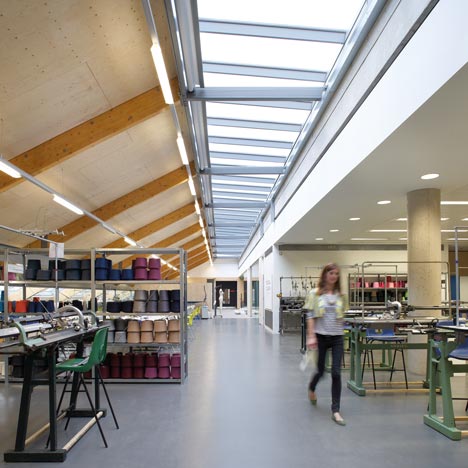
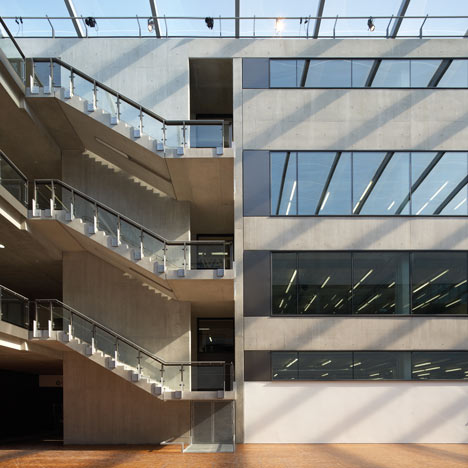
" b8 X* L! W: A( X( [0 N5 A9 V6 x. S$ MThe two new four storey studio buildings are arranged at either side of a covered central ‘street’, some 110m long, 12m wide and 20m high, covered by a translucent ETFE roof and punctuated by a regular rhythm of service cores that accommodate lifts, stairs and toilets. At the northern end, a new centre for the Performing Arts will house a fully equipped theatre complete with fly-tower as well as rehearsal and teaching spaces.8 w' f+ t3 b: [5 T7 R1 V
 , l: ^- n, V' K1 J' p& |% m , l: ^- n, V' K1 J' p& |% m
The internal ‘street’ has been conceived as a dynamic area, an arena for student life, akin to the much-loved stair at the centre of the college’s previous main building. Bridges linking the various cores and workspaces cross it, offering break-out areas for meeting, relaxing and people-watching and exchanging ideas.
! N' u+ U+ q% O# z" O" a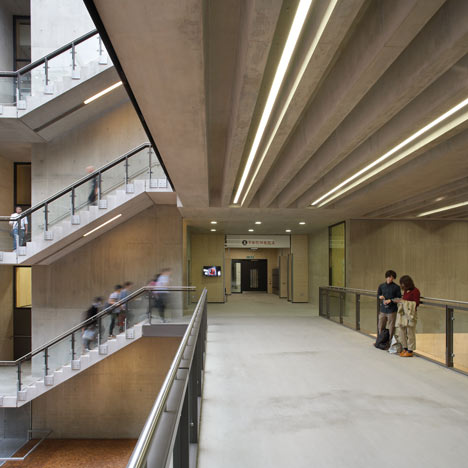 2 w$ v* U) f/ n# B0 d 2 w$ v* U) f/ n# B0 d
The street will be used for exhibitions, fashion shows and performances, the spaces being large enough to build temporary pavilions for example. Viewing points allow students to watch others working or performing, and the work of other disciplines can be seen and exhibited.
* E9 D. K3 F5 |) E; f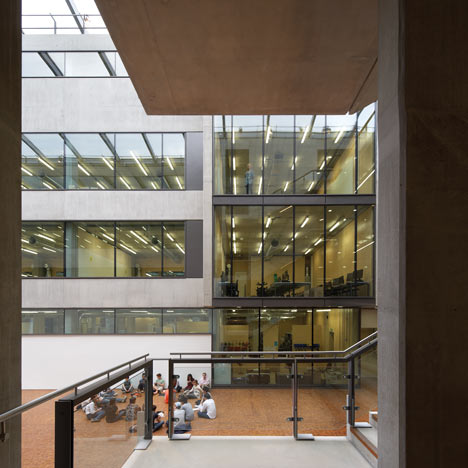 ! ]; t4 p# i: ]5 L ! ]; t4 p# i: ]5 L
At the southern end of the new block and running parallel with the north end of the Granary Building is a second covered ‘street’, offering public access through this part of the building interior. Lifts rising through this space recall the vertical movement of grain, which gave the complex its original purpose.5 h/ L& _/ B7 t [1 E5 l# B
 % t- h7 r0 O5 ~ Q6 J % t- h7 r0 O5 ~ Q6 J
Flooring details either retain existing turntables or hint at their historic location, while within the Granary Building itself, the hoists have been retained, crowning a newly inserted lightwell. Simple glazing maintain the integrity of the unbroken openings, rhythmically punctuating the Granary Building’s main façade.3 l4 ^* |/ E6 ?
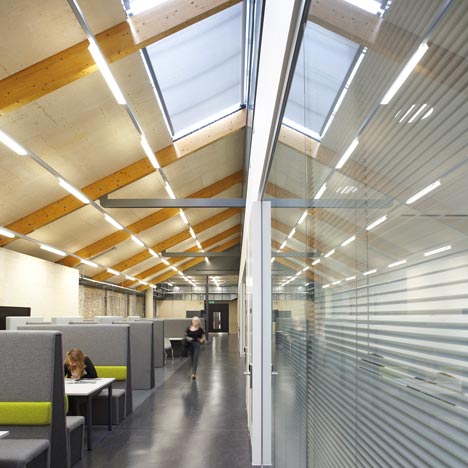
% n9 Y# v b$ k, c& y5 U4 b) ?. M& bThe new University of the Arts London campus is one of the first parts of the King’s Cross development to be completed. As such, it not only provides Central Saint Martins with the flexible and dynamic spaces that it needs to educate and develop the artists and designers of the future, but also makes a firm statement of the role of the Arts in the quarter, to which it will give critical mass and energy.- |% y3 Z& x* ?8 L( r& Y/ K
! U! T m4 o# ~! L! ?Project Details:
" x! V. ~! L2 z9 x8 P( p, JThe £200m campus brings together 4,000 Central Saint Martins students and 1,000 staff under one roof. It is made up of:# M$ P/ q1 P, h* p/ X- p
• 10 acres of floor space
' j8 y( D/ |0 d- Z0 L, i* v! ^• Over 1.3 million timber blocks6 K* G% c4 B& A& C
• Enough concrete to fill eight Olympic swimming pools4 m/ |: ^2 L% H T. v) v
The three-storey building is based around an internal street, naturally lit through a translucent roof.8 Z5 P/ E9 m7 T( Q9 z; o# J
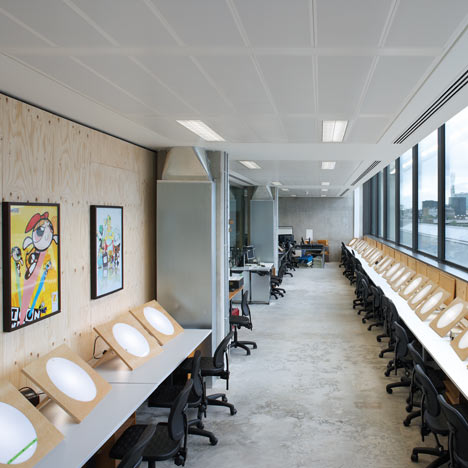
It contains four levels of multi-purpose workshops and specialist studios, including:
& s* B0 R$ M7 @" O, k3 ~4 N4 Y: o• Performance design and practice labs
) O. d3 }9 n* o" X3 ]7 A, D• Casting, wood fabrication and metal fabrication workshops I! |4 ~( y5 u' Z
• Post-production workshops& u+ C' h2 G* N2 H: K) h0 B
• Film, effects and sound studios
8 h2 a- v' K9 W( p! q7 Y- y6 P6 w• Architecture and spatial studios+ b8 B9 ~; V$ p
• Fashion and textiles studios6 H! \* O; M: S5 J) Y
• Photography studios and darkrooms
8 L/ _& V5 N7 z3 ~8 M• Product and industrial design studios9 n9 Z/ U7 v9 g8 S1 C
• Graphic and communication design studios • Jewellery workshops
, W$ R+ J9 Y% _3 f9 r1 G$ s• Art studios
3 F9 @7 P# j* T7 }7 [8 c7 A" \+ ?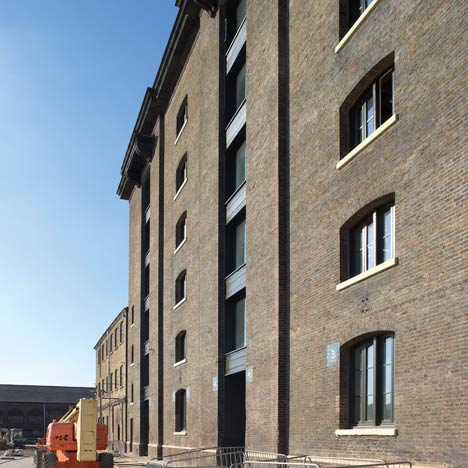 % g+ K* i$ v) _& b7 w# k; T % g+ K* i$ v) _& b7 w# k; T
The campus is also home to a 350 seat public theatre with its own entrance.4 ?/ N% ~9 c4 T( J+ _- t/ x
 % j& w7 v; T3 ~6 {! N5 e % j& w7 v; T3 ~6 {! N5 e
Above: Photography is by John Sturrock
, b- O! @0 M9 c* i; h( j: UIt occupies the Grade II listed Granary Building, built in 1851, which managed the storage and distribution of grain at the height of the Victorian industrial boom.6 e2 t/ b6 v% G1 C* O" v: a$ g
 n1 N V0 b! @9 U# _* b+ W+ W n1 N V0 b! @9 U# _* b+ W+ W
Click above for larger image
, Y, Y* ^" b& \! I# g, y# ~It faces onto Granary Square which, when completed in June 2012, will be one of London’s largest public squares." w2 J- n$ ^2 Y5 P) n- y, `+ u. {
 4 c6 ~' J+ e" T1 W% [ 4 c6 ~' J+ e" T1 W% [
Click above for larger image
5 E4 f4 |, m/ f: S) l* Y! Y7 BThe campus has been designed by architects Stanton Williams and forms part of King’s Cross, a 67 acre development in central London – a new piece of the city with a brand new postcode, London N1C. King’s Cross is being developed by the King’s Cross Central Limited Partnership, which brings together Argent Group, London & Continental Railways and DHL Supply Chain.* p3 ?' s& a, N; g4 t
 Key Values:0 r4 z8 T6 v: J/ m: t5 ` Key Values:0 r4 z8 T6 v: J/ m: t5 `
Project Value: £200M (based on cost of land, building, fit-out and expansion incl. third floor)
% u/ b8 k3 o' ^+ ?; K z. Z8 } Key dates: Key dates:
) q- u! h# B" w0 Z+ FConstruction Start date: January 2008
4 `% @% T# D' L* jCompletion Date: April 2011
?$ J e+ H0 b, v7 @( K% FDate of Occupation: August 20113 y2 L$ b1 H7 m0 f
Construction phase: January 2008 – August 2011 (Incl. fit-out) Student arrival: 3rd October 20110 ?/ E @3 ?8 t+ k0 ?
Building Details. U1 n' A7 ^9 h) f8 t
Postal Address: Granary Building, 1 Granary Square, London, N1C 4AA Gross Internal Area: approx. 40,000m2
8 t- P# n. }4 d. t& u' N+ ^ Design team: Design team:
, ?" b- Z9 ?' i* T1 VSite Developer: Argent
, } T! H4 p8 u0 _Tenant: University of the Arts London
% O* I1 E2 G8 s7 |Architect: Stanton Williams) ^1 l! s3 {: [4 }' Y8 B
Structure: Scott Wilson5 k2 o! v% u' A* W, f
Environmental / M&E engineering: Atelier 106 Q" b" T% w% X" L# ?# ] P/ _7 T: }3 i
Architectural lighting: Spiers and Major
- c' n) m/ `' \! P* D9 pQuantity Surveyor / Employer’s Agent: Davis Langdon3 d* G- }" W( r2 k' w
Landscape Architect: Townsend Landscape Architects.7 N% c `: k* T1 l: L6 ?
 Facade consultant: Arup Facades Engineering; F( Y2 z, z1 m3 S" _/ B, R Facade consultant: Arup Facades Engineering; F( Y2 z, z1 m3 S" _/ B, R
CDM coordinator: Scott Wilson.- H( k; F$ [8 Z7 L0 `9 i
Contractor team – base build4 r( ]& {/ L; Y. _0 X/ Z/ o
Main contractor: Bam Construction Limited" E( E3 X, b4 b: X. Y/ H& [8 R- J
Contractor’s Architect: Bam Design (new buildings) / Weedon Partnership (Granary)
& `' {8 B5 ? ^( hConservation Architect: Richard Griffiths Architects
2 T' }& m5 f6 l3 T7 B ?: U[Search:DCION$ M& T* }6 ~ b, s; i+ P3 U3 I
 Structure: Bam Design (new buildings) AKS Lister Beare (existing structure)4 q2 `3 e1 u; S& e Structure: Bam Design (new buildings) AKS Lister Beare (existing structure)4 q2 `3 e1 u; S& e
M&E engineering: Bam Design
1 O# d. e _! l4 UFire consultant: Aecom7 T% M; H( D! O' E X
Acoustic consultant: Sandy Brown Associates
, P7 S/ ?' _) b& z; s8 c4 YAccess consultant: All Clear Design5 N, V- M* p6 t
Contractor team – fit-out: U/ C; D& t0 n9 C% B/ V& B5 M
Contractor: Overbury
, u/ b9 n* k8 M$ vInterior fit-out Architect: Pringle Brandon
' t9 o9 ]4 R( f- J0 t- _2 v9 y& v/ h+ j* V4 y2 {/ B% W
|
3 z$ h. s) m- }& b$ |0 L8 P5 x% P
|








LZ 这是照片 还是3D 和PS做的 我很喜欢 求教